



DAY 1 – ARRIVE IN HANOI | WELCOME TO THE THOUSAND-YEAR CAPITAL
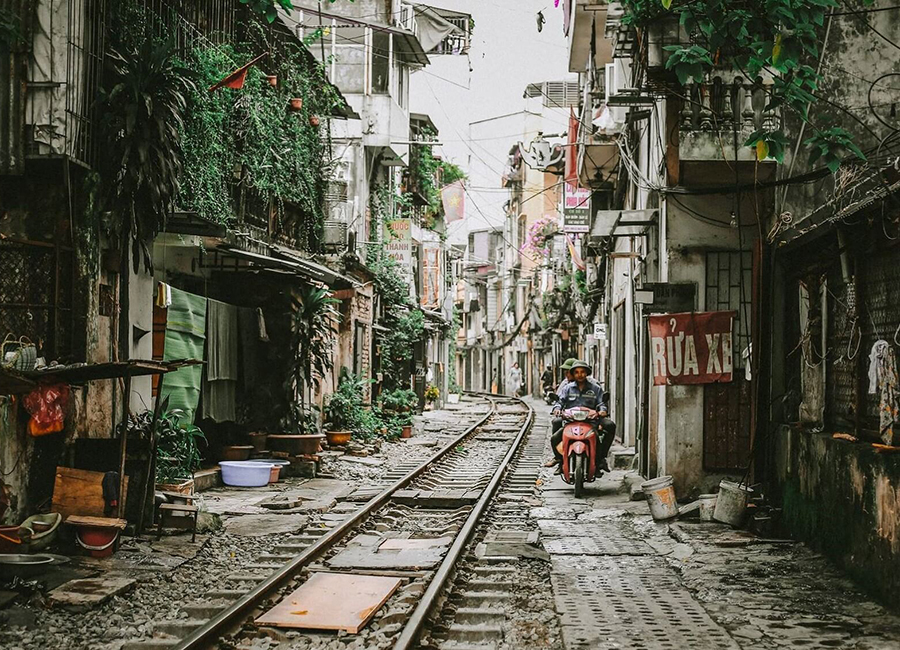
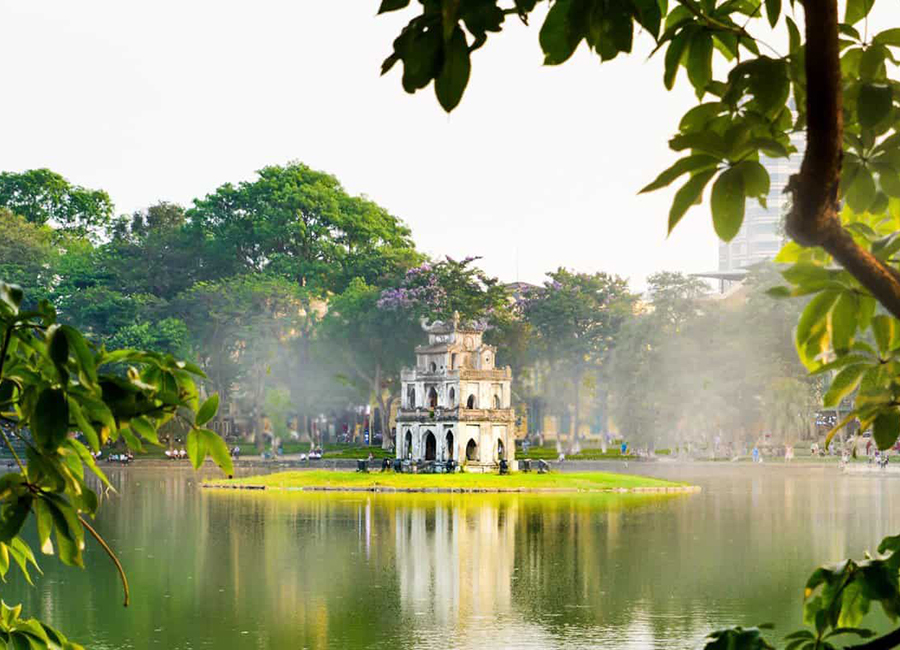
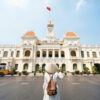
Touch down at Noi Bai International Airport and transfer by private car to your boutique hotel in Hanoi’s Old Quarter or French Quarter. The Old Quarter’s 36 guild streets date from the 13th century, each originally named for the trade practiced there: Hang Bac for silver, Hang Ma for paper offerings, Hang Gai for silk. The French Quarter’s wide tree-lined boulevards and art deco facades speak of a different era entirely. An early evening stroll around Hoan Kiem Lake before dinner at a rooftop restaurant: pho bo broth simmered since before dawn, cha ca La Vong turmeric-grilled fish with dill, and bun cha grilled pork — the three dishes that define northern Vietnamese cuisine in a single meal.
DAY 2 – HANOI | OLD QUARTER, TEMPLE OF LITERATURE & HO CHI MINH COMPLEX
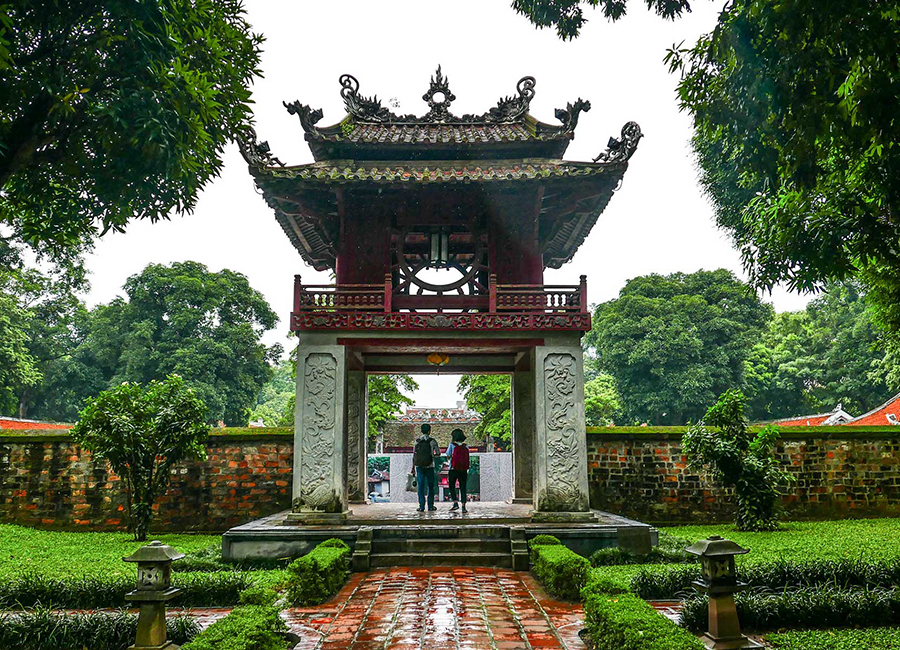
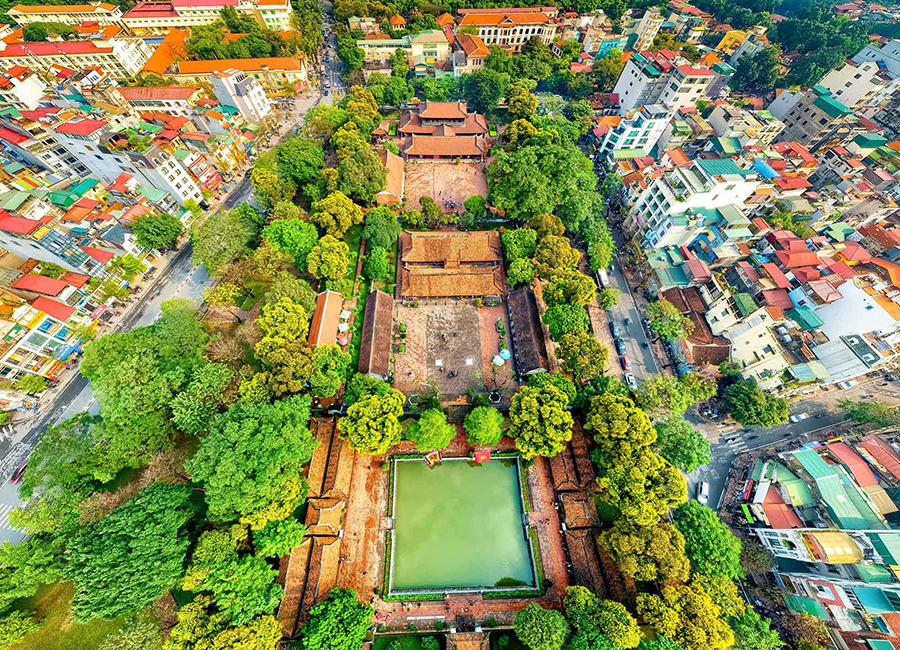
Begin at the Temple of Literature — Van Mieu — Vietnam’s first university, founded in 1070, its 82 stone steles mounted on stone tortoises inscribed with the names of doctoral graduates from five centuries of imperial scholarship. The architecture — five successive courtyards of pavilions, ponds, and gateways — is the finest example of traditional Vietnamese civic design in existence. Continue to the Ho Chi Minh Mausoleum complex: the marble mausoleum, the One-Pillar Pagoda rising from a single lotus-shaped stone column above a small lake, and the stilt house where Vietnam’s founding leader chose to live rather than the adjacent Presidential Palace. Afternoon: a guided cyclo ride through the 36 Streets of the Old Quarter, past silk merchants and paper lantern makers and the workshops of craftsmen who have occupied the same addresses for generations.
DAY 3 – HA LONG BAY | OVERNIGHT BOUTIQUE CRUISE
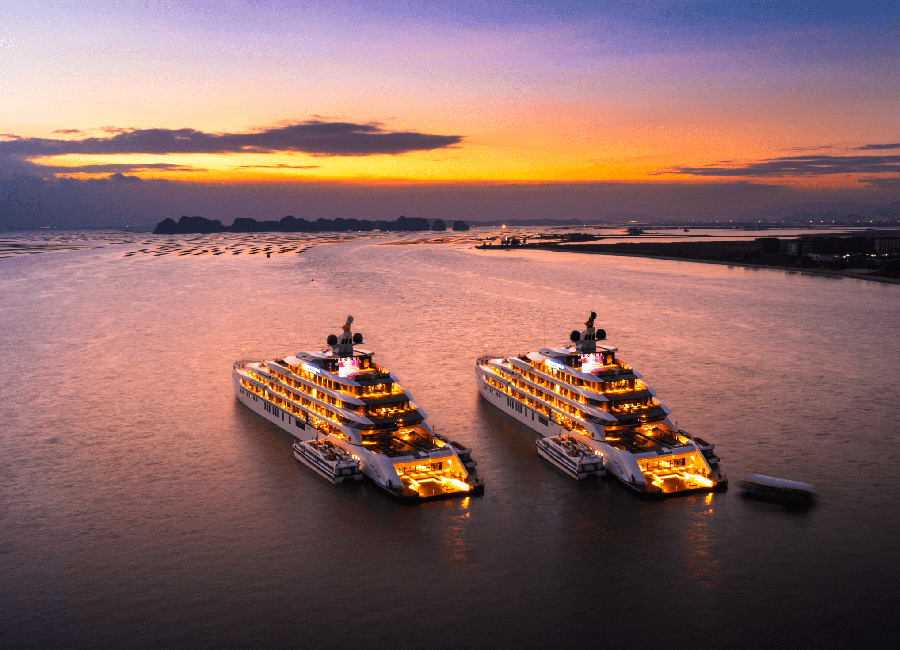
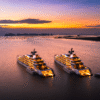
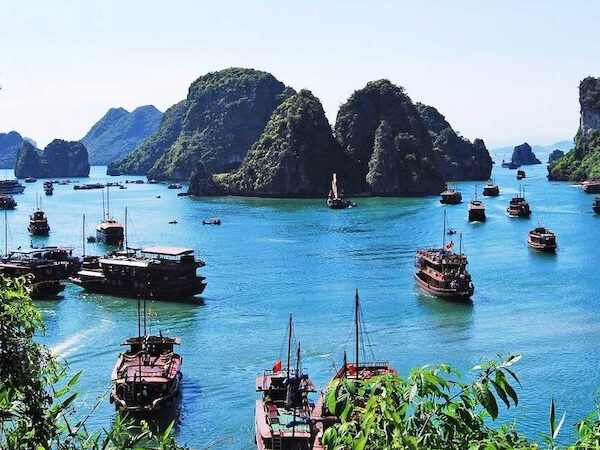
A mid-morning transfer east through the Red River Delta toward Ha Long Bay, where 1,600 limestone karst islands rise from the Gulf of Tonkin in a landscape UNESCO designated a World Heritage Site in 1994. Board your boutique cruise vessel and move into the bay through the afternoon, the karst towers multiplying around the ship until the horizon is nothing but limestone and water. A kayaking excursion through a hidden lagoon accessible only through a low cave passage at the right tide, a swim in a cove of jade-colored water, and a seafood dinner on the upper deck as the bay settles into the silence of evening.
DAY 4 – HA LONG BAY | RETURN TO HANOI | FLIGHT TO HUE
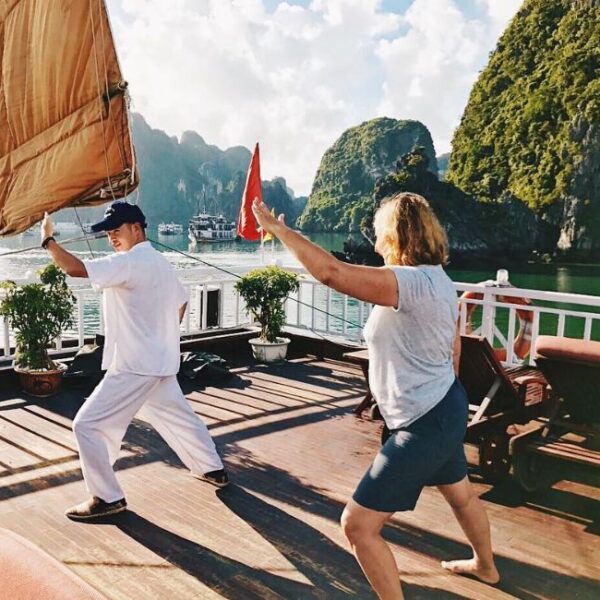
Morning Tai Chi on the sundeck, brunch on board during the return sail, then your flight south to Hue — 700 kilometres and an entirely different Vietnam. Hue was the imperial capital of the Nguyen Dynasty from 1802 to 1945, and the city carries that history in its bones. Transfer to your hotel and an evening walk along the Perfume River. Dinner at a Hue restaurant: the cuisine of the former royal court — banh beo steamed rice cakes, bun bo Hue spicy beef noodle soup, and banh khoai crispy rice crepes.
DAY 5 – HUE | IMPERIAL CITADEL, ROYAL TOMBS & THIEN MU PAGODA
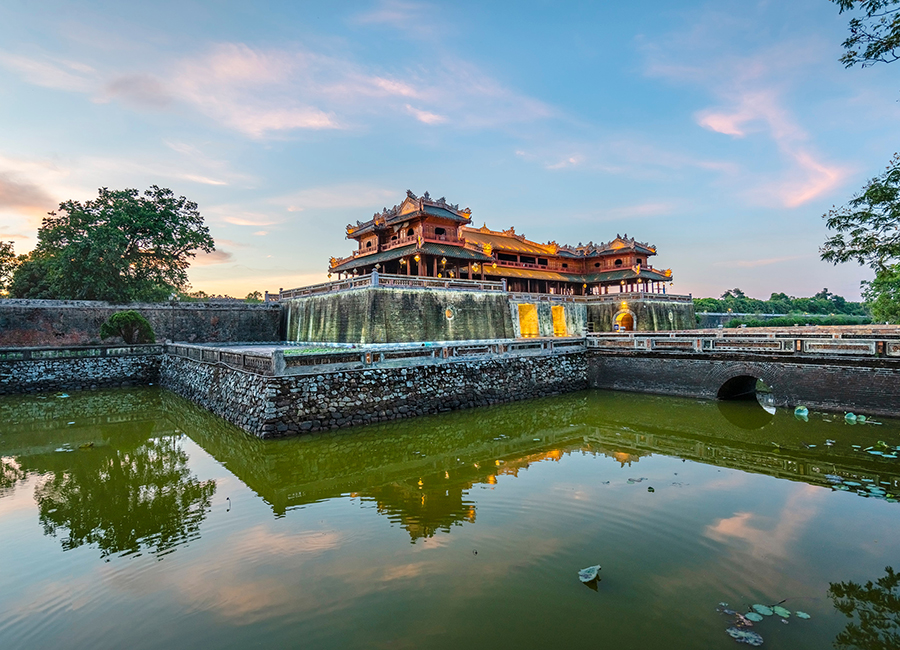
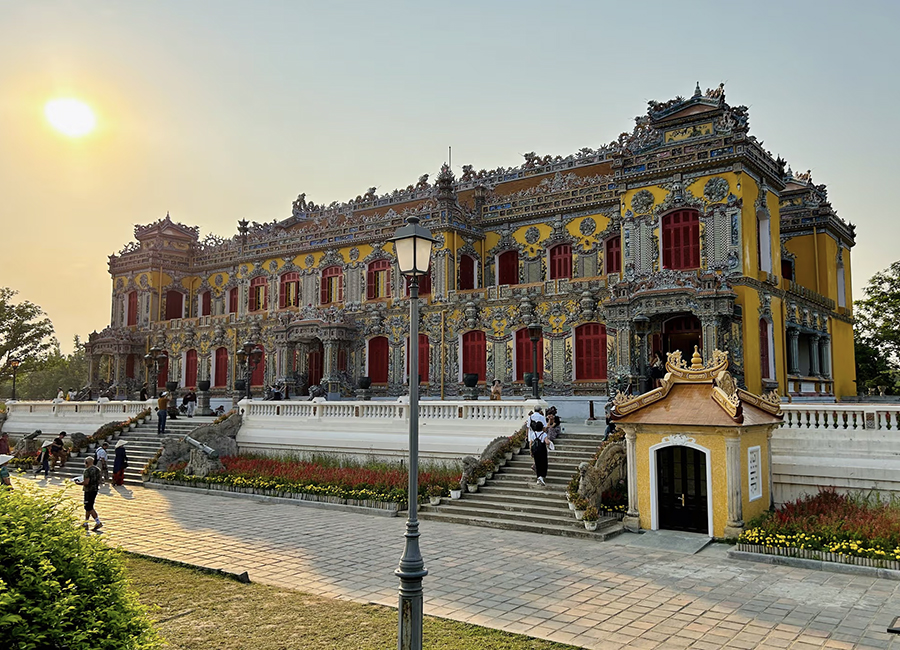
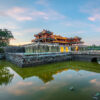
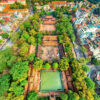
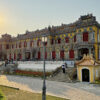
Begin at the Imperial Citadel — a walled city within a walled city, its Forbidden Purple City modeled on Beijing’s Forbidden City. The outer walls were heavily damaged during the 1968 Tet Offensive and have been under UNESCO-supported restoration since the 1990s. Continue by dragon boat along the Perfume River to the Tomb of Tu Duc — the most elaborate of the seven Nguyen royal tombs, built by the emperor himself during his own lifetime as a retreat for poetry and philosophical reflection. The complex includes a lake, a pavilion, a theater, a library, and the tomb itself, all enclosed within a pine-forested walled garden. Return upstream to Thien Mu Pagoda — the seven-tiered Phuoc Duyen Tower, built in 1601, the most recognizable symbol of Hue. Evening: a royal banquet dinner at one of Hue’s heritage restaurants, dishes adapted from court cuisine served in traditional lacquerware.
DAY 6 – HUE TO HOI AN | HAI VAN PASS | MY SON SANCTUARY
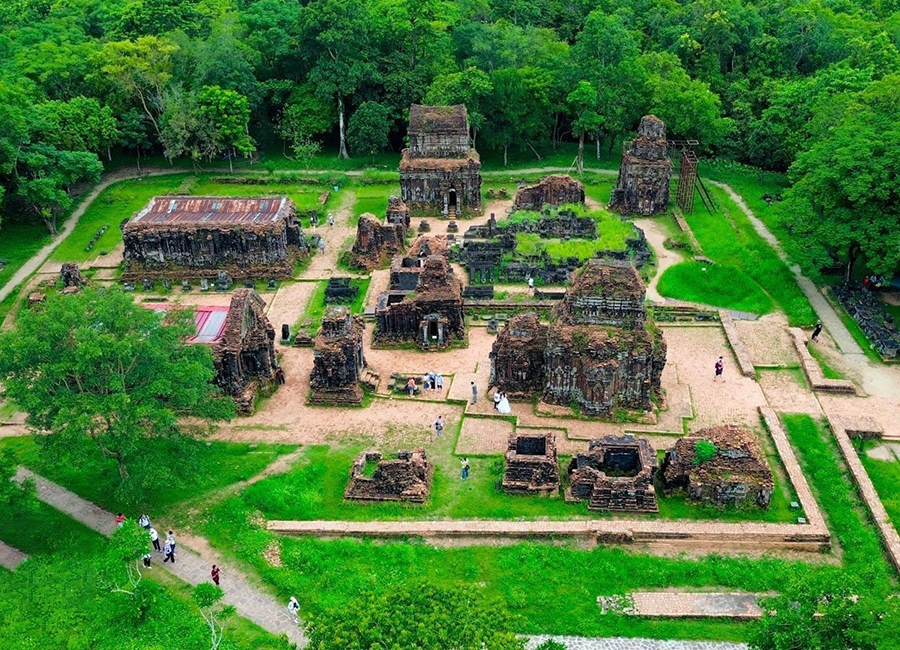
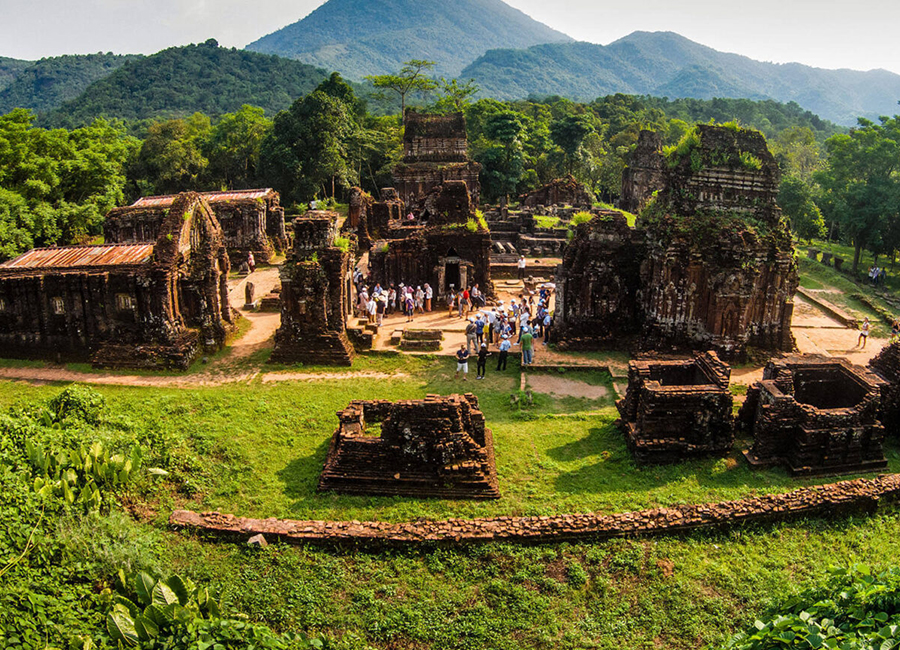
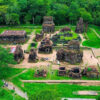
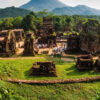
Depart Hue by road heading south, crossing the Hai Van Pass at 500 metres — a mountain promontory dividing the climatic zones of north and south central Vietnam, with crumbling French fortifications visible on the summit ridge. Continue south through Da Nang to My Son Sanctuary: a complex of Hindu temples built by the Cham civilization between the 4th and 14th centuries in a jungle valley. The Cham people were the dominant civilization of central Vietnam for a thousand years; My Son is what remains of their spiritual architecture — damaged by American bombing but still hauntingly beautiful, the brick towers rising from the jungle floor with carvings of dancers, deities, and mythological scenes. A guided tour with an art historian guide specializing in Cham civilization. Arrive in Hoi An in the early evening.
DAY 7 – HOI AN | ANCIENT TOWN, JAPANESE BRIDGE & RIVER LIFE
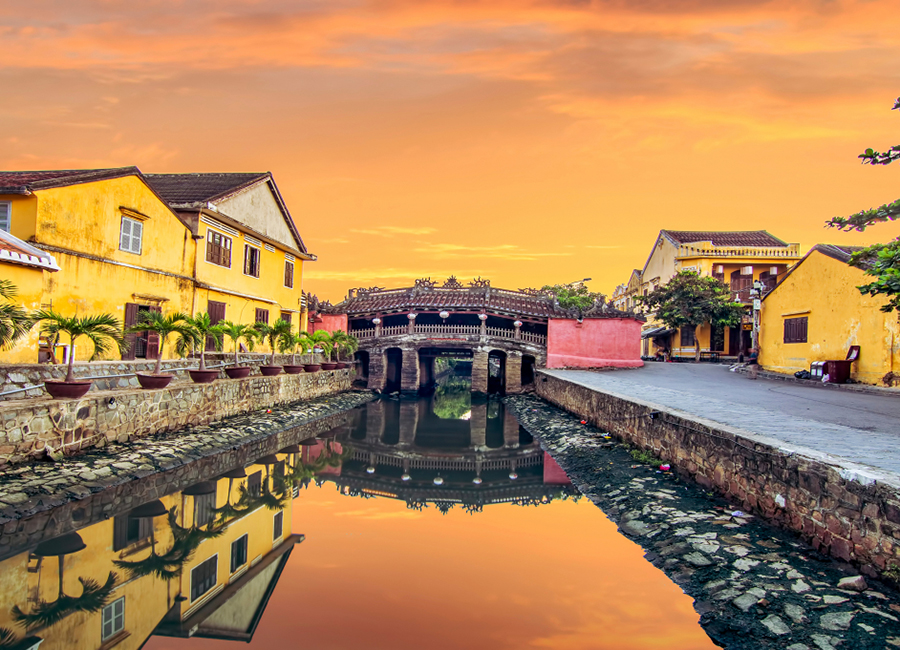
Hoi An is the best-preserved example of a Southeast Asian trading port from the 15th to 19th centuries, its Old Town a quarter of some 1,000 buildings of historical significance: Chinese merchant houses, Japanese architecture in the Covered Bridge quarter, French colonial facades, and Vietnamese tube houses all occupying the same streets in a layered architectural record of 400 years of international trade. Begin with the Japanese Covered Bridge — Chua Cau — built by the Japanese trading community in the early 17th century. A guided walk through the Old Town with a local heritage guide who grew up in the quarter: the Fukian Chinese Assembly Hall, the Tan Ky Ancient House — a 200-year-old merchant residence with Japanese roof beams, Chinese ceramic decorations, and Vietnamese carvings on the same wooden screen. Afternoon at leisure. Evening in the Old Town as the lanterns come on: the paper lanterns multiplying over the river in a soft, impractical light that makes the old buildings look exactly as they must have looked in 1850.
DAY 8 – HO CHI MINH CITY | COLONIAL SAIGON & HISTORY
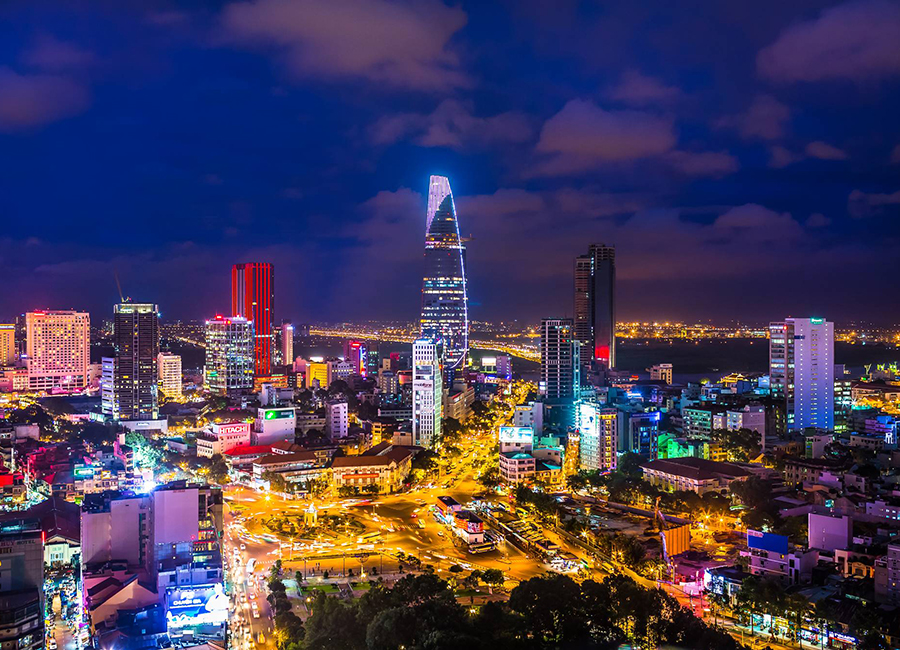
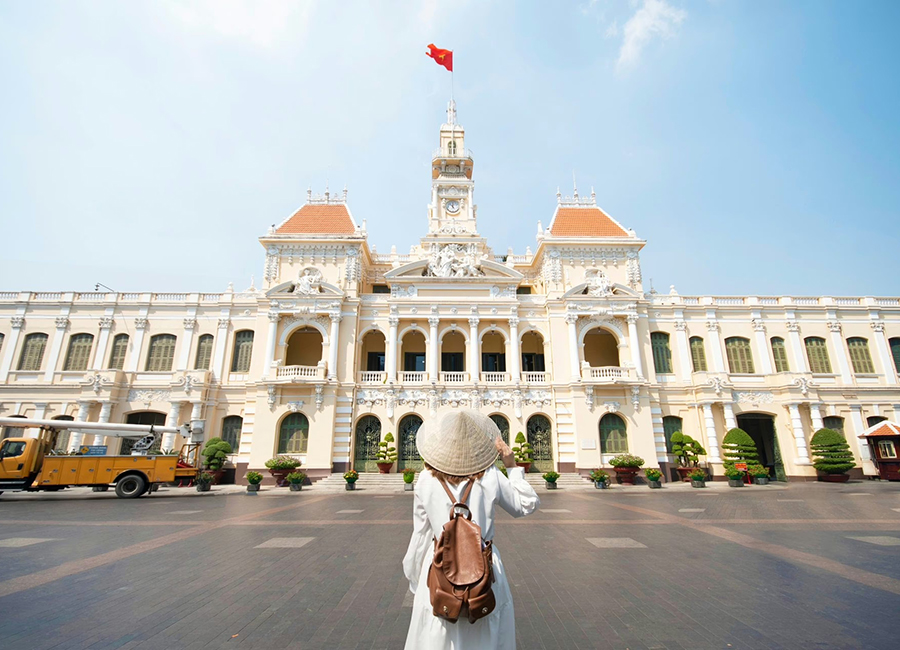
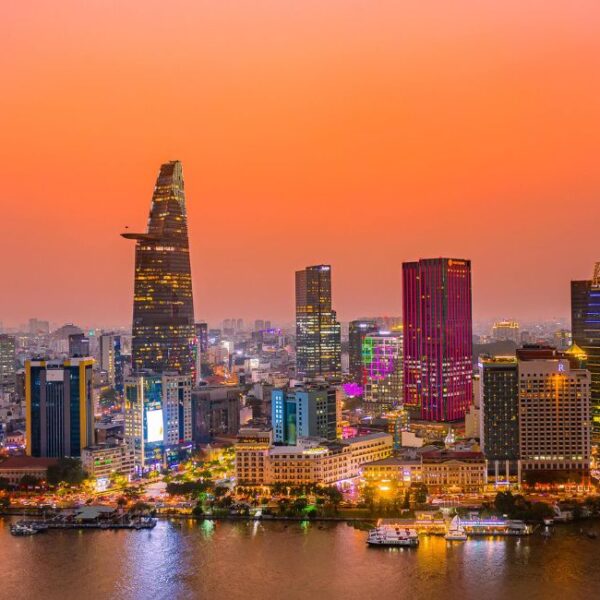
A full day in Saigon before the flight to Cambodia. Morning: the Reunification Palace — the former Presidential Palace of South Vietnam, its command bunkers and war rooms preserved exactly as they were on April 30, 1975, when a North Vietnamese tank crashed through the front gates and the war ended. The palace’s 1960s modernist interior — designed by architect Ngo Viet Thu — is one of the great mid-century spaces in Southeast Asia. Continue to the Ho Chi Minh City Museum, housed in a French colonial building of 1890. Afternoon: the antique shops of Le Cong Kieu Street, or the quiet of the Jade Emperor Pagoda — a Taoist temple of 1909 whose interior, dense with incense smoke and lacquered deities, feels utterly removed from the city immediately outside its gates. War Remnants Museum in the late afternoon. Farewell dinner in Saigon.
DAY 9 – FLIGHT TO PHNOM PENH | ROYAL PALACE & RIVERFRONT
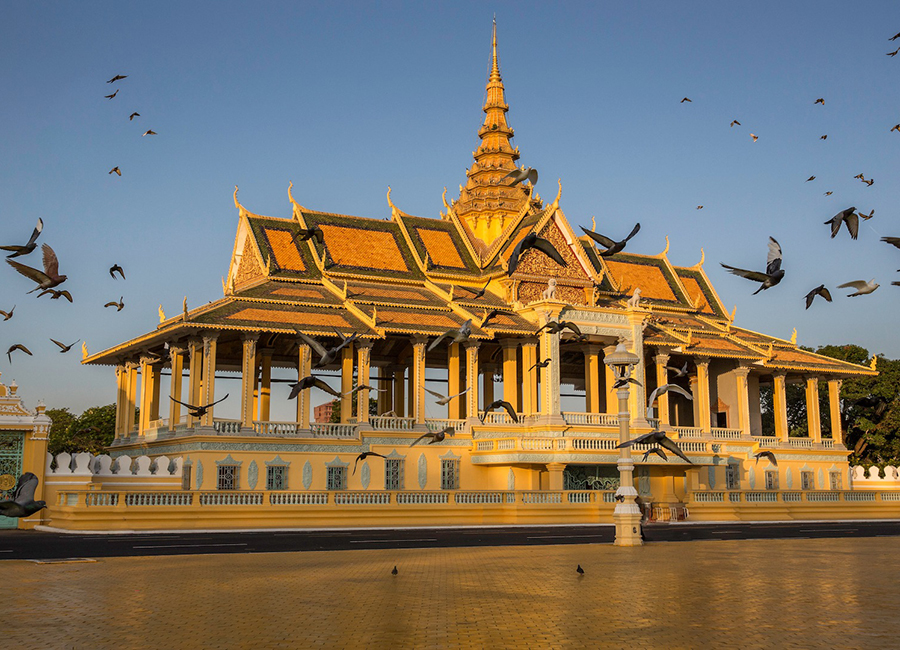
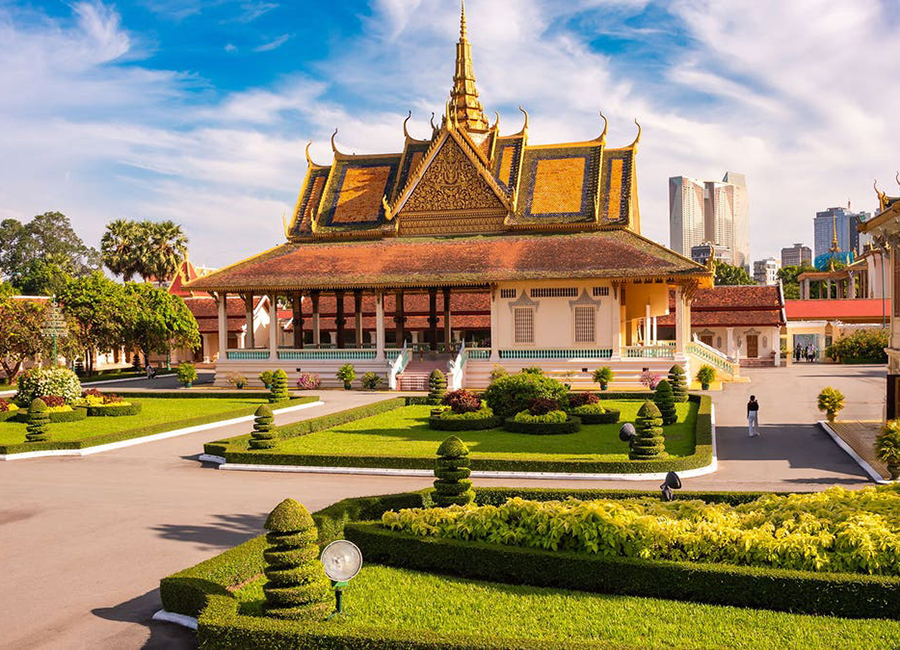
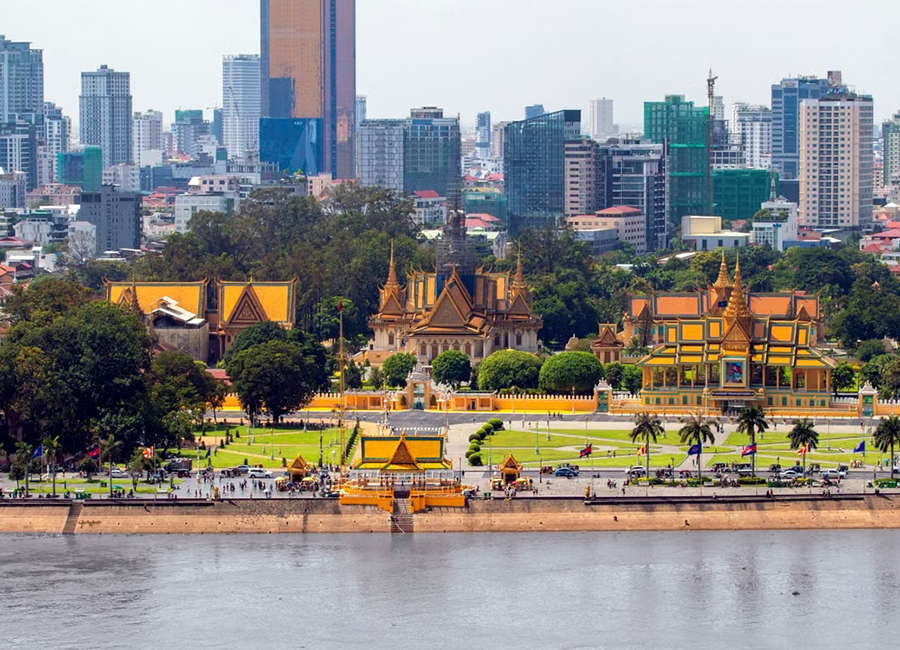
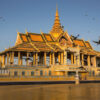
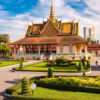
Fly to Phnom Penh — 45 minutes from Saigon to the Cambodian capital at the confluence of the Mekong, the Bassac, and the Tonle Sap rivers. Transfer to your hotel and walk to the Royal Palace compound for a late afternoon private visit: the Throne Hall, the Silver Pagoda — its floor tiled with 5,329 silver blocks — housing a life-size gold Buddha studded with 9,584 diamonds and a small Emerald Buddha of baccarat crystal said to be the most sacred object in Cambodia. An evening walk along the Sisowath Quay riverfront promenade before dinner at a riverside Khmer restaurant: amok trey coconut milk fish curry, lok lak wok-tossed beef, and num banh chok fresh rice noodles.
DAY 10 – PHNOM PENH | TUOL SLENG, CHOEUNG EK & NATIONAL MUSEUM
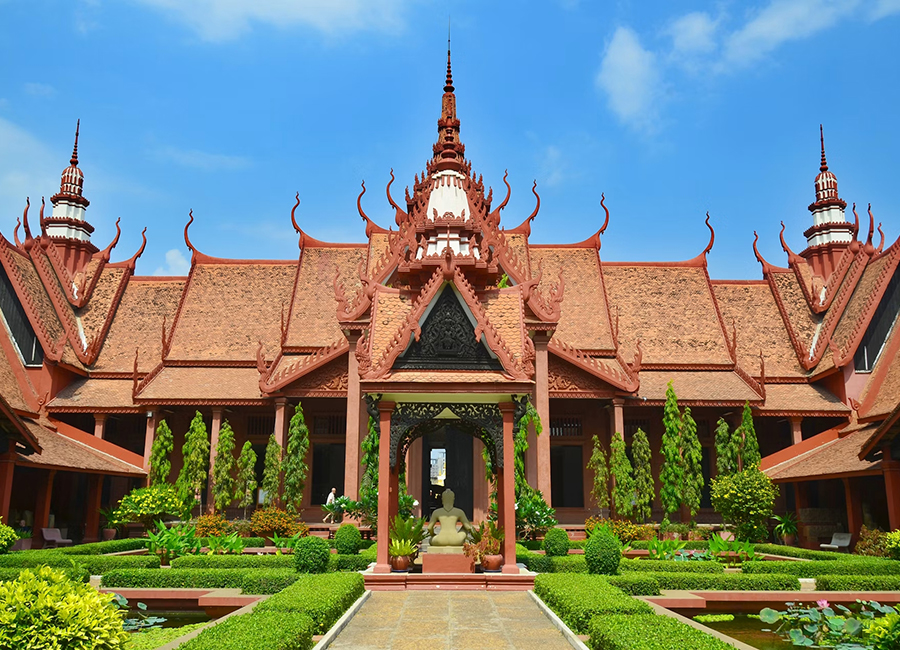
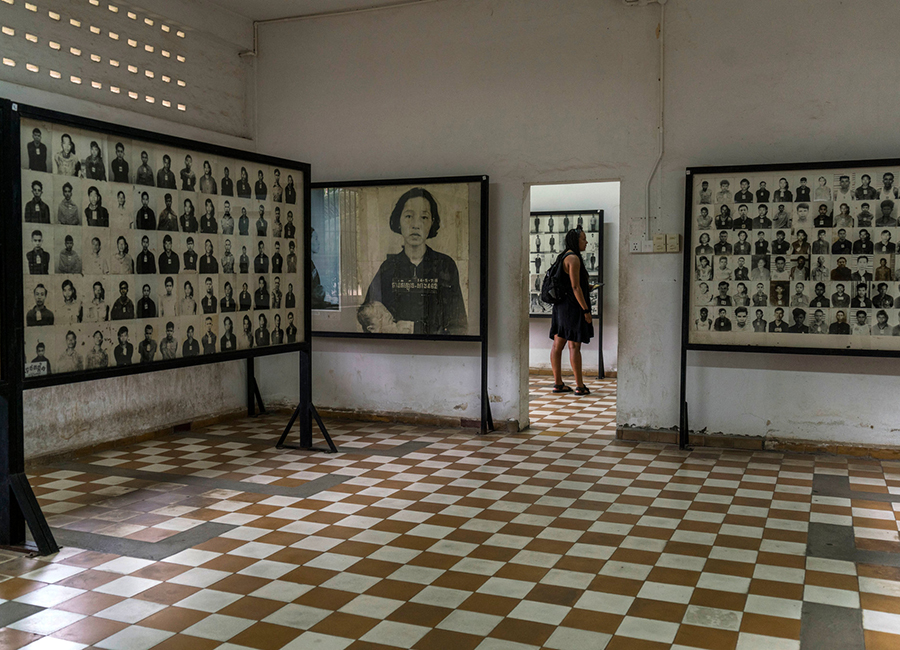
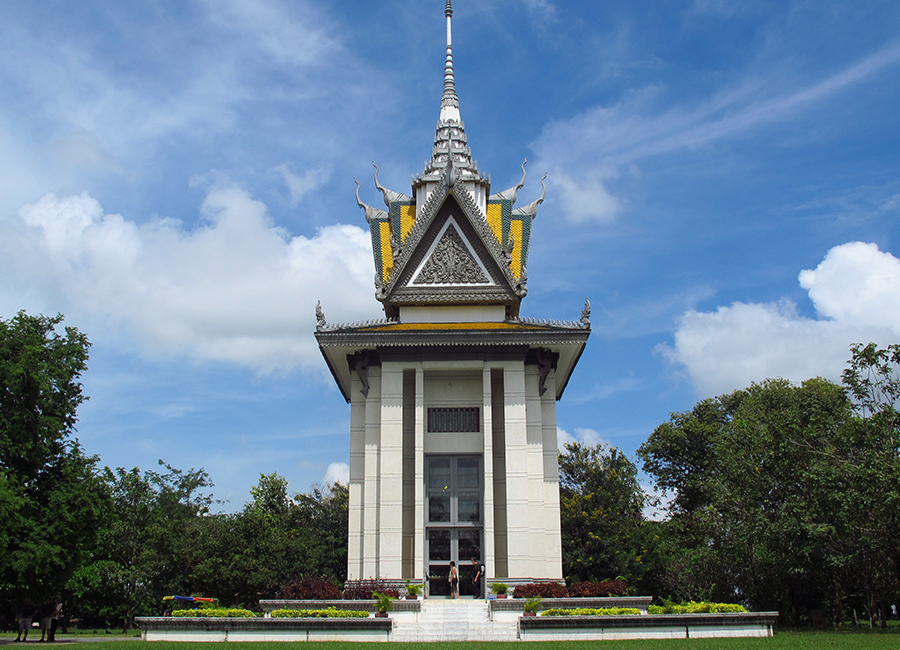
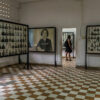
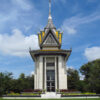
A morning that carries the weight of the 20th century’s worst chapters. Begin at Tuol Sleng — the S-21 security prison where the Khmer Rouge imprisoned and executed an estimated 17,000 people between 1975 and 1979. The photographs of prisoners taken on arrival line the walls of the main building. Two survivors of S-21 are still alive; on some mornings, you will find one of them sitting at a table in the courtyard, signing copies of his memoir. Continue to Choeung Ek — the killing fields 15 kilometres from the city, now a memorial site with a Buddhist stupa containing the remains of 8,000 victims. Return to the city for lunch and recovery time. Afternoon at the National Museum of Cambodia: the world’s finest collection of Khmer sculpture, spanning 1,500 years, arranged in open-air pavilions. The guide is an art historian who has worked with the museum’s collection for 15 years.
DAY 11 – FLIGHT TO SIEM REAP | ANGKOR WAT SUNSET ORIENTATION
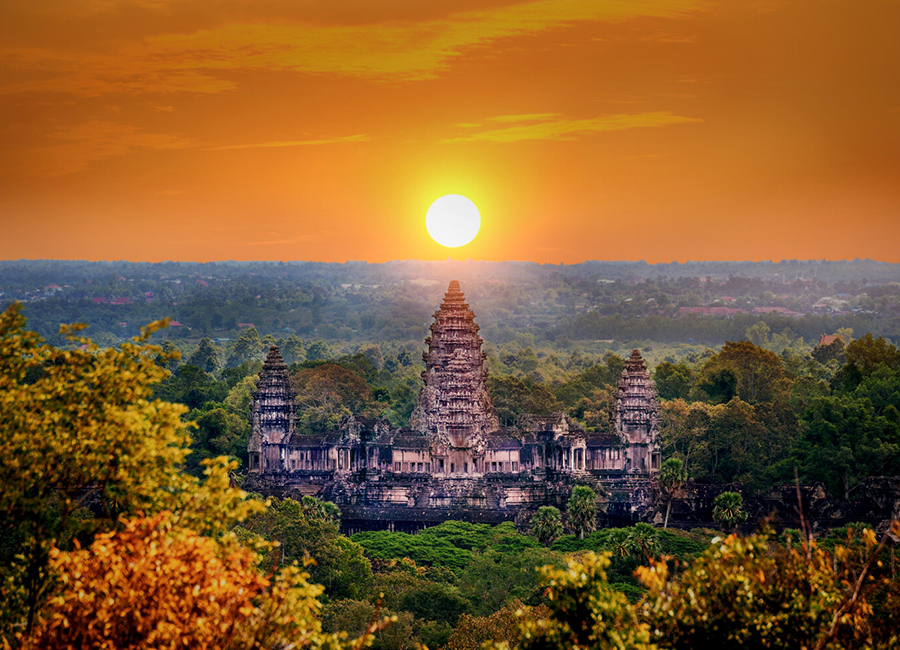
Fly to Siem Reap — 45 minutes — and transfer to your boutique heritage hotel in the Old French Quarter. Late afternoon transfer to the Angkor Archaeological Park for a sunset orientation visit with your archaeologist guide: Phnom Bakheng — the hilltop temple that rises above the jungle canopy with views over the entire Angkor plain — and a first look at the outer walls of Angkor Wat itself from the western causeway as the light shifts from gold to amber to the deep red that the sandstone takes on in the last minutes before dark. The guide’s purpose today is context, not comprehensive coverage; tomorrow belongs to the full experience. Dinner at a Khmer fine dining restaurant: tasting menu of royal court dishes in a French colonial villa garden.
DAY 12 – SIEM REAP | ANGKOR WAT SUNRISE | FULL TEMPLE DAY | DEPARTURE
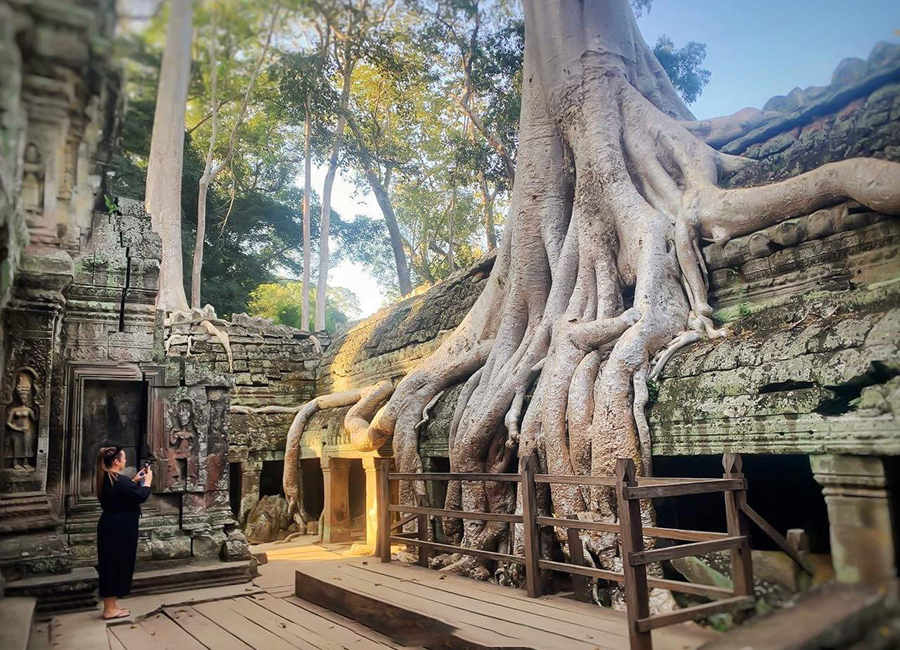
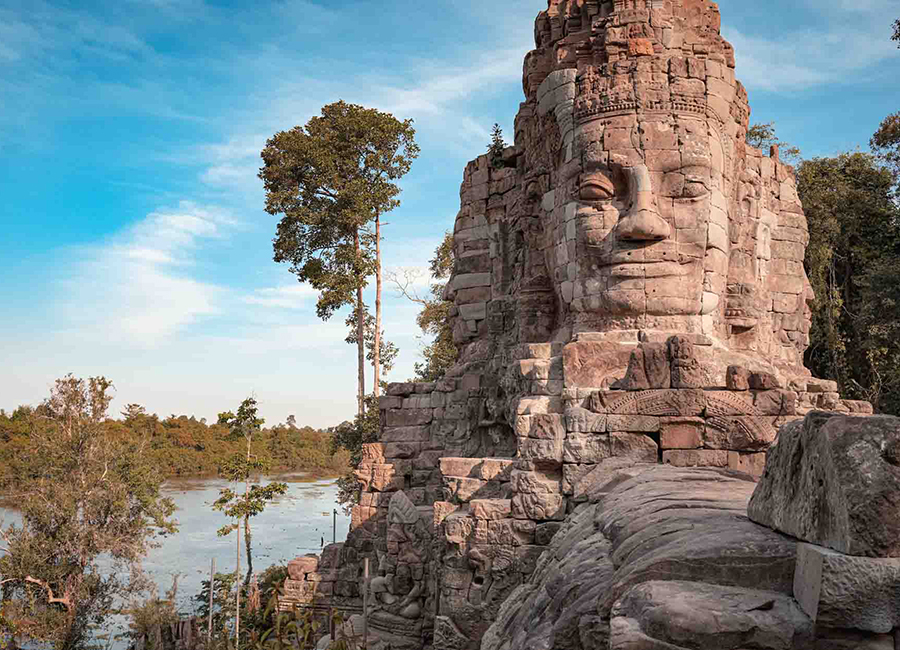
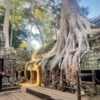
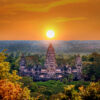
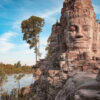
A 4:45 AM departure for the most iconic sunrise in Southeast Asia. Angkor Wat at dawn is the gradual revelation of the world’s largest religious monument from complete darkness into full golden light, its five towers assembling themselves in the reflection pools over ninety minutes during which the light never stops changing. A full day with the archaeologist guide: the outer gallery’s 600 metres of bas-relief carving — the most extensive narrative relief sculpture in existence — then Bayon with its 216 enormous stone faces gazing in every direction from 54 towers, Ta Prohm where the roots of silk-cotton trees continue their slow dismemberment of the sandstone walls, and finally Banteay Srei — built from pink sandstone and covered in decorative carving of such delicacy that art historian Philippe Stern described it as a precious jewel of Khmer art. Late lunch and transfer to Siem Reap International Airport for your onward flight.
Tour Inclusions
- 11 nights accommodation — Vietnam nights as Tour 1 + 2 nights Phnom Penh boutique hotel + 2 nights Siem Reap heritage boutique hotel (all with breakfast)
- All Vietnam inclusions from Tour 1 (Days 1–7)
- Saigon full-day heritage tour: Reunification Palace, HCMC Museum, Jade Emperor Pagoda, War Remnants Museum (Day 8)
- Royal Palace & Silver Pagoda private visit Phnom Penh (Day 9)
- Tuol Sleng Genocide Museum & Choeung Ek guided visit (Day 10)
- National Museum of Cambodia private art historian tour (Day 10)
- Angkor Archaeological Park: sunset orientation (Day 11) and full day with archaeologist guide (Day 12)
- Angkor Wat sunrise (Day 12)
- English-speaking heritage specialist guides in both countries throughout
- All domestic and regional flights (economy class)
- All transfers by private air-conditioned vehicle throughout
- Welcome dinner Hanoi (Day 1) and farewell dinner Siem Reap (Day 11)
- 24/7 on-trip support from Sun DMC operations team across both countries
Tour Exclusions
- International flights — Visa fees (Cambodia e-visa available; Sun DMC can advise) — Travel insurance — Personal expenses
Practical Information
Best Time to Travel: November – March (dry season in both Vietnam and Cambodia; optimal for Angkor temple visits)
Minimum Pax: 2 pax (FIT); 12 pax for group rates
Physical Level: Easy to moderate — Angkor requires 6-8 hours of walking on temple grounds; all other sites involve short-to-medium walking distances
Accommodation Tier: Standard (4-star boutique) / Superior (5-star heritage) / Luxury (5-star throughout) — available upon request
Important Note: Tuol Sleng and Choeung Ek visits are emotionally demanding. Sun DMC recommends a gentler afternoon schedule following the morning visits. The guide is briefed to support visitors who find the experience overwhelming.
Customization: Can be extended with Phnom Penh river cruise or Siem Reap countryside excursion. Contact your Sun DMC account manager for NET rates.
 Hanoi → Sapa → Ha Giang
Reviews
There are no reviews yet.